
When comparing vaping vs smoking, the most important fact is that the two are not equally harmful.
Smoking burns tobacco and produces thousands of chemicals, including tar and carbon monoxide. Vaping heats an e-liquid without burning tobacco, so it exposes users to fewer toxins and generally at much lower levels.
Current NHS guidance states that vaping is less harmful than smoking and can help adult smokers quit. However, vaping is not completely harmless, its long-term effects are still being studied and it is not recommended for children, young people or people who have never smoked.
This guide explains the health differences between vaping and smoking, whether vaping can help people quit cigarettes and what recent UK law and tax changes mean in 2026.
This article is intended for adult smokers considering switching away from cigarettes. Nicotine is highly addictive, and vaping products are for adults aged 18 and over only.
Vaping vs Smoking: Quick Comparison
| Health consideration | Smoking | Vaping |
|---|---|---|
| Burns tobacco | Yes | No |
| Produces tar | Yes | No |
| Produces carbon monoxide | Yes | No |
| Exposure to toxic chemicals | Very high | Fewer toxins at lower levels |
| Cancer risk | Strongly established | Expected to be substantially lower, but not risk-free |
| Heart and lung disease risk | Strongly established | Lower than smoking, but still being studied |
| Nicotine addiction | Common | Possible where nicotine is used |
| Recommended for non-smokers | No | No |
| Can support quitting smoking | No | Yes, for some adult smokers |
The healthiest option is not to smoke or vape. For someone who already smokes, completely switching to vaping is expected to be substantially less harmful than continuing to smoke.
Why Is Smoking So Harmful?
Smoking is harmful because cigarettes burn tobacco.
Combustion creates smoke containing thousands of chemicals, including many substances known to damage human health. These include tar, carbon monoxide, benzene, arsenic and formaldehyde.
Smoking harms almost every organ in the body and remains a leading cause of preventable illness and death in the UK.
Cancer
Smoking is a major cause of lung cancer and is also associated with cancers of the:
- Mouth
- Throat
- Oesophagus
- Stomach
- Pancreas
- Kidney
- Bladder
- Bowel
- Cervix
The risk is not limited to people who smoke heavily. The length of time a person smokes and their overall exposure both affect the likelihood of developing smoking-related disease.
Heart and circulatory disease
Smoking damages blood vessels, raises the risk of blood clots and makes the heart work harder.
It is a major risk factor for:
- Heart attacks
- Strokes
- Coronary heart disease
- Peripheral arterial disease
- Aortic aneurysms
Carbon monoxide in cigarette smoke reduces the amount of oxygen the blood can carry, while other chemicals damage the lining of blood vessels.
Lung disease
Smoking damages lung tissue and the small airways used for breathing.
It is a leading cause of:
- Chronic obstructive pulmonary disease
- Emphysema
- Chronic bronchitis
- Persistent coughing
- Reduced lung function
- Respiratory infections
The damage can build gradually, which means some smokers do not notice serious symptoms until the disease has progressed.
Other effects of smoking
Smoking is also linked to:
- Gum disease and tooth loss
- Reduced fertility
- Pregnancy complications
- Weakened immune function
- Slower wound healing
- Premature skin ageing
- Reduced circulation
- Erectile dysfunction
- Increased risk of type 2 diabetes
Second-hand cigarette smoke can also harm other people, particularly children, pregnant people and those with existing heart or lung conditions.
Is Vaping Safer Than Smoking?
According to the NHS, vaping is less harmful than smoking because it exposes users to fewer toxins and at lower levels.
Vapes do not burn tobacco. Instead, a battery-powered coil heats e-liquid to create an aerosol that the user inhales.
Because there is no combustion, vaping does not produce tar or carbon monoxide, two of the most harmful components of cigarette smoke.
This does not mean vaping is completely safe.
Vape aerosol can contain potentially harmful substances, and researchers are continuing to study the effects of long-term use. Nicotine can also cause dependence, regardless of whether it comes from cigarettes, vaping products or another source.
The fairest summary is:
- Smoking is extremely harmful.
- Vaping is not risk-free.
- Vaping is substantially less harmful than smoking.
- People who do not smoke should not start vaping.
- Adult smokers are likely to reduce their health risks by switching completely from cigarettes to vaping.
Why Is Vaping Less Harmful Than Smoking?
The main difference is the absence of burning tobacco.
No tar
Tar is the sticky collection of particles created when tobacco burns. It damages lung tissue and contains cancer-causing substances.
Vaping does not produce tobacco tar.
No carbon monoxide
Carbon monoxide is a poisonous gas produced by combustion. It attaches to red blood cells and reduces their ability to transport oxygen around the body.
Vaping does not produce carbon monoxide in the way smoking does.
Lower exposure to toxins
Vape aerosol may contain some chemicals that can also be found in cigarette smoke, but generally at much lower levels.
Product quality, device condition and how the vape is used can all affect emissions. This is one reason adult vapers should use regulated products from established UK retailers and follow the manufacturer’s instructions.
Controlled ingredients
Legal UK vape products are subject to rules covering areas such as:
- Maximum nicotine strength
- Nicotine-containing bottle size
- Pod and tank capacity
- Ingredient restrictions
- Product notification
- Packaging
- Health warnings
- Child-resistant containers
These regulations do not make vaping harmless, but they provide controls that do not exist for illicit or unregulated products.
Is Vaping 95% Safer Than Smoking?
You may have seen claims that vaping is “95% safer” or “95% less harmful” than smoking.
This figure originated from earlier public-health assessments and has often been repeated as a simple way to communicate the large difference in risk.
More recent NHS wording avoids giving an exact percentage. It says that vaping poses a small fraction of the risk of smoking and exposes users to fewer toxins at lower levels.
That is the more responsible way to explain the evidence.
It is not possible to assign every person or product one precise percentage because risk can vary depending on:
- How long someone has smoked
- Whether they stop smoking completely
- How frequently they vape
- The products used
- The condition of the device and coil
- Individual medical circumstances
- The length of vaping use
The central conclusion remains unchanged: vaping is significantly less harmful than continuing to smoke, but it is not harmless.
Can Vaping Help You Quit Smoking?
Yes. Nicotine vaping is recognised by the NHS as one option that can help adult smokers stop smoking.
A major Cochrane evidence review published in 2025 found that nicotine e-cigarettes helped more people stop smoking for at least six months than traditional nicotine replacement therapy, such as patches or gum.
Vaping may help because it addresses several parts of cigarette dependence at the same time:
- Nicotine cravings
- The hand-to-mouth action
- Inhaling and exhaling
- Familiar smoking routines
- The immediate sensation users associate with nicotine
Some smokers find this easier to adapt to than nicotine patches or gum alone.
However, results vary. Support from a stop-smoking service, pharmacist or healthcare professional can improve the chance of successfully quitting.
Switching Completely Matters
The greatest health benefit comes from stopping smoking cigarettes completely.
Someone who both smokes and vapes remains exposed to the harmful chemicals created by burning tobacco. Simply reducing cigarette consumption may lower exposure, but it does not remove the risks associated with smoking.
A vape may be used temporarily while transitioning away from cigarettes, but the intended goal should be to stop smoking completely rather than continue using both products indefinitely.
Once a person is confident that they will not return to smoking, they may also choose to gradually reduce their nicotine strength or stop vaping.
Our guide to choosing the right nicotine strength explains the common UK strengths and the factors that affect how strong an e-liquid feels.
Why Do Some People Think Vaping Is as Harmful as Smoking?
Public understanding of vaping risk remains poor.
ASH reported in 2026 that more than half of British adults, including more than half of people who smoke, believed vaping was as harmful as or more harmful than smoking.
This is contrary to the evidence used by UK health authorities.
Confusion can be caused by:
- Sensational media headlines
- Research findings being reported without context
- Illicit products being treated as representative of regulated vapes
- Health warnings being misunderstood as proof of equal harm
- The phrase “not risk-free” being interpreted as “equally dangerous”
- Overseas incidents involving substances not found in normal UK nicotine e-liquids
It is right to discuss potential vaping risks. However, those risks should be compared with the much greater and well-established dangers of smoking.
For an adult smoker, exaggerating the risks of vaping may discourage a switch that could significantly reduce their exposure to harmful chemicals.
What Is in Vape Aerosol?
Vape aerosol is not simply harmless water vapour.
Most e-liquids contain a combination of:
- Propylene glycol
- Vegetable glycerine
- Food-grade flavourings
- Nicotine, unless the liquid is nicotine-free
When heated, these ingredients create an aerosol that can contain small amounts of other compounds.
The exact contents and emission levels can be affected by:
- Device power
- Coil temperature
- E-liquid formulation
- Coil age
- Wick condition
- Airflow
- Puff duration
- Whether the coil is sufficiently saturated
Using a damaged coil, allowing a pod to run dry or operating a device outside its recommended wattage can produce an unpleasant burnt taste and potentially increase unwanted emissions.
Replace burnt or damaged pods and coils promptly and use only e-liquid suitable for the device.
Is Nicotine the Main Cause of Smoking-Related Disease?
Nicotine is addictive, but it is not the primary cause of smoking-related cancer and lung disease.
Most of the serious damage from cigarettes comes from the toxic substances created when tobacco burns.
Nicotine can:
- Create and maintain dependence
- Temporarily increase heart rate
- Affect blood pressure
- Cause nausea, dizziness or headaches when too much is consumed
- Be particularly unsuitable for children and young people
- Pose risks during pregnancy
This means nicotine should not be treated as harmless. However, separating nicotine from tobacco combustion is a major reason vaping is less harmful than smoking.
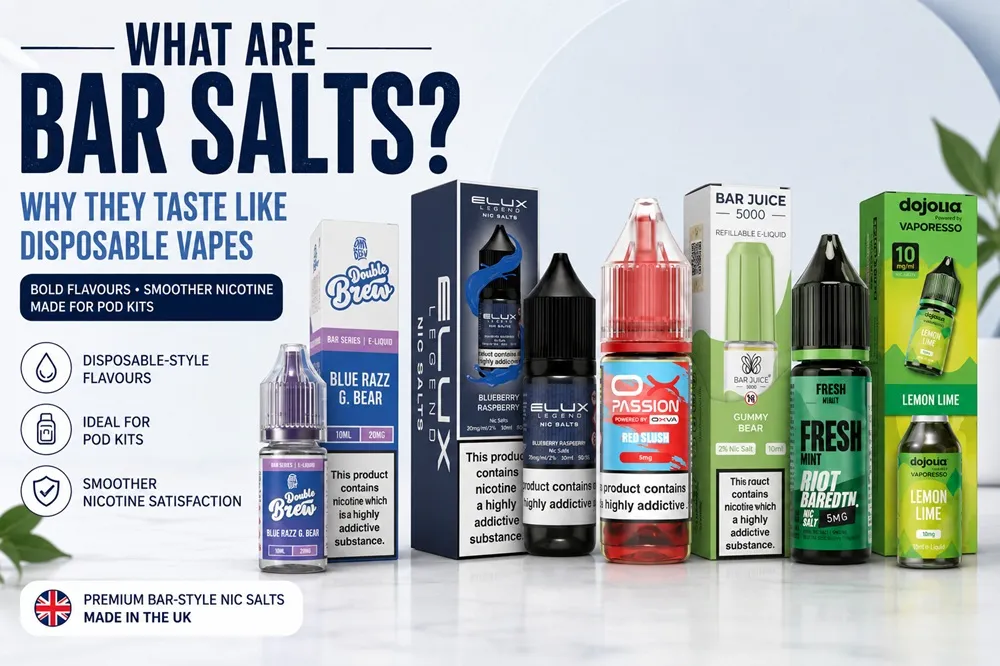
What Are Nic Salts?
Nicotine salts are a form of nicotine commonly used in e-liquids and prefilled pod systems.
They generally provide a smoother throat hit at higher strengths than traditional freebase nicotine. This makes them a popular option among adult smokers moving away from cigarettes, particularly when used in compact mouth-to-lung pod kits.
Nic salts are commonly available in strengths including 5mg, 10mg and 20mg, although the options vary by brand.
A higher strength is not automatically better. The right option depends on:
- Previous cigarette consumption
- The device and pod resistance
- How frequently the person vapes
- Puff duration
- Individual nicotine tolerance
Read our complete guide explaining what nic salts are before selecting a strength or device.
Is Second-Hand Vapour Harmful?
Second-hand cigarette smoke is known to cause serious health problems.
Vaping does not produce tobacco smoke, and current evidence suggests the risks to people nearby are small compared with exposure to second-hand cigarette smoke.
However, research into long-term and repeated exposure to vape aerosol is continuing.
As a sensible precaution:
- Do not vape around children
- Avoid vaping near pregnant people
- Respect other people’s preferences
- Follow rules set by homes, workplaces and venues
- Avoid vaping around anyone with respiratory sensitivities
Vaping policies are set by individual organisations and property owners. The fact that smoking is prohibited somewhere does not automatically mean vaping is permitted.
Is Vaping Safe During Pregnancy?
Smoking during pregnancy exposes the developing baby to carbon monoxide and many other harmful chemicals.
The NHS advises that, when vaping helps a pregnant person stop smoking, it is much safer than continuing to smoke. However, licensed nicotine replacement products are generally the recommended first option because more is known about their use during pregnancy.
Anyone who is pregnant and struggling to stop smoking should speak to:
- A midwife
- A GP
- A pharmacist
- A local stop-smoking service
Pregnant people should not rely solely on general online information when choosing a nicotine product.
Is Vaping Bad for Your Lungs?
Vaping is likely to be less harmful to the lungs than smoking, but inhaling vape aerosol is not the same as breathing clean air.
Some users may experience:
- Coughing
- Throat irritation
- Dry mouth
- Shortness of breath
- Headaches
- Nausea
These effects may relate to nicotine strength, dehydration, a damaged coil, an unsuitable liquid, excessive vaping or sensitivity to an ingredient.
Persistent breathing problems, chest pain or severe symptoms should not be treated as a normal part of vaping. Stop using the product and seek appropriate medical advice.
Is Vaping Bad for Your Heart?
Smoking is a major cause of heart and circulatory disease.
Switching completely from smoking to vaping removes exposure to carbon monoxide and greatly reduces exposure to many other harmful substances.
However, nicotine can temporarily increase heart rate and blood pressure. The long-term cardiovascular effects of vaping are still being studied.
People with heart conditions or concerns about nicotine should seek advice from a healthcare professional or stop-smoking service.
Vaping vs Smoking Costs in the UK
Vaping will often cost less than smoking, particularly for someone using a refillable device and bottled e-liquid.
However, the actual comparison depends on:
- The number and type of cigarettes smoked
- The chosen vape device
- How much e-liquid is used
- Coil or pod replacement frequency
- Whether prefilled or refillable products are used
- Product prices
- The Vaping Products Duty beginning in October 2026
A refillable pod kit normally has a higher initial cost than one pack of cigarettes, but the battery device can be reused. The ongoing purchases are usually e-liquid and replacement pods or coils.
Prefilled pod systems cost more to run than many bottled-liquid setups but offer greater convenience.
For help comparing formats, read our guide to prefilled pod kits, refillable pod kits and disposables.
What Changed in UK Vaping Law in 2025 and 2026?
Several significant regulatory changes affect UK smokers and vapers.
The disposable vape ban
Single-use disposable vapes were banned from sale and supply across the UK from 1 June 2025.
The ban does not prohibit all prefilled devices. Rechargeable products designed to be reused with separately available replacement pods can still be sold when they comply with the relevant rules.
Adult smokers looking for a straightforward reusable device can browse our vape starter kits.
The Tobacco and Vapes Act 2026
The Tobacco and Vapes Act received Royal Assent on 29 April 2026.
It creates the framework for measures including:
- A smoke-free generation restriction on tobacco sales
- Retail licensing for tobacco, vaping and nicotine products
- Stronger enforcement powers
- Controls on vape advertising and sponsorship
- Powers to regulate packaging, flavours, displays and product presentation
Not every measure took effect immediately when the Act became law.
Some provisions require commencement dates, consultations or further regulations. The government has stated that it intends the UK-wide vape advertising and sponsorship restrictions to begin from 1 June 2027.
Claims that all flavours, packaging formats or displays have already been prohibited would therefore be incorrect as of July 2026.
Vaping Products Duty
The new Vaping Products Duty begins on 1 October 2026.
It applies at a flat rate of £2.20 per 10ml of vaping liquid, whether or not the liquid contains nicotine.
VAT will continue to apply to the final taxable selling price. The precise retail-price change may therefore vary between products and retailers.
The introduction of duty changes the cost comparison, but it does not change the health evidence comparing vaping with smoking.
What Type of Vape Is Best for Switching From Smoking?
A simple mouth-to-lung device is often the most familiar starting point for an adult smoker.
Mouth-to-lung vaping involves drawing vapour into the mouth before inhaling, which resembles the way many people smoke a cigarette.
Common beginner options include:
- Refillable pod kits
- Prefilled pod kits
- Compact starter kits
- Vape pens
- Devices with automatic draw activation
Useful features include:
- Simple controls
- A restricted mouth-to-lung draw
- Clear battery information
- Widely available replacement pods or coils
- Compatibility with suitable nicotine strengths
- USB-C charging
- Adjustable airflow where available
Large sub-ohm devices produce considerably more vapour and are not normally the simplest starting point for someone moving directly from cigarettes.
Browse our starter vape kits to compare beginner-friendly reusable devices.
How to Improve Your Chances of Quitting Smoking
Using a vape is only one part of a successful quit attempt.
The following steps may help:
Choose enough nicotine
Using a nicotine strength that is too low can leave cravings uncontrolled and make a return to cigarettes more likely.
The right strength should reduce cravings without producing unpleasant effects such as dizziness, nausea or headaches.
Use the vape when cravings occur
Some new users take only a few small puffs and then assume vaping does not work for them.
Vaping delivers nicotine differently from a cigarette. It may require more frequent use, particularly during the first few days of switching.
Stop smoking completely
Aim to remove cigarettes rather than settling into long-term dual use.
Even a small number of cigarettes continues to expose the body to toxic smoke.
Use professional support
Local stop-smoking services can provide advice, behavioural support and access to suitable treatments.
A GP or pharmacist can also help someone compare vaping with licensed stop-smoking medicines and nicotine replacement products.
Adjust the setup when necessary
A poor experience may be caused by the wrong:
- Nicotine strength
- Pod resistance
- Airflow
- E-liquid
- Device type
Changing one of these can make the transition more manageable.
Should Non-Smokers Vape?
No.
Vaping is primarily a harm-reduction option for adult smokers who would otherwise continue smoking.
A person who does not smoke gains no health advantage by taking up vaping and may become dependent on nicotine.
Children and young people should never vape. It is illegal to sell nicotine vaping products to anyone under 18 or for an adult to purchase them on behalf of someone under 18.
Frequently Asked Questions
Is vaping safer than smoking cigarettes? +
Yes. Current NHS guidance states that vaping is less harmful than smoking because it exposes users to fewer toxins and at lower levels. Vaping is not risk-free, but it does not produce the tar or carbon monoxide created by burning tobacco.
Is vaping completely safe? +
No. Vaping can expose users to potentially harmful substances, nicotine can cause dependence and the long-term effects are still being studied. People who do not smoke should not begin vaping.
Can vaping help someone quit smoking? +
Yes. The NHS recognises nicotine vaping as one option for quitting smoking. A 2025 Cochrane review found that nicotine e-cigarettes helped more people stop smoking for at least six months than traditional nicotine replacement therapy in the studies assessed.
Is nicotine the harmful part of cigarettes? +
Nicotine is addictive and is not harmless, but it is not the main cause of smoking-related cancer and lung disease. Most of the severe harm comes from toxic substances released when tobacco burns.
Is it better to smoke fewer cigarettes and vape as well? +
Reducing cigarette consumption may lower smoke exposure, but the greatest health benefit comes from stopping smoking completely. Long-term dual use still exposes the person to the toxic chemicals produced by cigarettes.
Are disposable vapes still legal in the UK? +
No. Single-use disposable vapes were banned from sale and supply across the UK from 1 June 2025. Rechargeable and reusable vape kits can still be sold when they meet the applicable product rules.
When does the UK vape tax begin? +
Vaping Products Duty begins on 1 October 2026 at a flat rate of £2.20 per 10ml of vaping liquid. It applies to both nicotine-containing and nicotine-free vape liquids.
Should someone who has never smoked start vaping? +
No. Vaping is intended as a lower-risk alternative for adult smokers, not as a product for non-smokers. Nicotine is addictive, and vaping is not risk-free.
Final Thoughts on Vaping vs Smoking
The evidence on vaping vs smoking does not suggest that vaping is harmless. It shows that smoking is substantially more dangerous.
Cigarettes burn tobacco and expose users to tar, carbon monoxide and thousands of chemicals. Vaping avoids tobacco combustion and exposes users to fewer toxins at lower levels.
For an adult who already smokes, completely switching to a regulated vaping product is likely to reduce exposure to many of the substances responsible for smoking-related disease. For someone who does not smoke, the best option is not to start vaping.
Anyone who needs help quitting can speak to a GP, pharmacist or local stop-smoking service. Adult smokers who have decided to switch can compare our starter vape kits, learn how to choose a nicotine strength or read more about nicotine salt e-liquids.
Sources and Further Reading
- NHS: Vaping to quit smoking
- NHS: Using e-cigarettes to stop smoking
- NHS: Vaping myths and facts
- Cochrane: Can electronic cigarettes help people stop smoking?
- ASH: Vaping – what you need to know
- ASH: Use of vapes among adults in Great Britain
- GOV.UK: Tobacco and Vapes Act becomes law
- GOV.UK: Introduction of Vaping Products Duty